When Does Your Company Actually Need a Rebrand?
Two signs your brand may have stopped reflecting the business behind it.
A company rarely outgrows its brand overnight.
More often, it happens gradually. The product improves. The team gains experience. The service becomes more sophisticated. The company discovers a clearer point of view about the market it operates in.
But the logo, website, and visual language remain almost exactly as they were when the business started.
There's a gap between what the company has become and what people see. And sometimes that gap is large enough to affect how its value is perceived.
When I look at an established brand, there are two signals I pay particular attention to.
The business has evolved, but the brand hasn't

An identity is often created for a specific moment in a company's history. It reflects the product, ambition, and audience at that time. That's perfectly reasonable.
The problem comes when the business moves forward and its identity stays behind.
Maybe the company has moved from an early experiment to an established offering. Maybe the quality of its service has increased significantly. Maybe it's serving a different audience or solving a more important problem.
Yet someone discovering it for the first time still sees the company it used to be.
This was the challenge with White Glove, a company offering automated trading software.
White Glove wasn't a new business looking for its first customers. The product was already in use, and the company had an existing customer base. But its template-based website and loosely defined visual identity didn't reflect the level of sophistication behind the offering.
That disconnect mattered even more because of the category. When you're asking people to consider software connected to their investment accounts, confidence and clarity are essential. A polished appearance alone can't earn trust, but an inconsistent or generic presence can make a difficult decision feel even harder.
We developed a new logo, supporting illustrations, and brand guidelines, creating a richer visual language around credibility, refinement, and a sense of security. The website brought those elements together with a clearer story and visual metaphors that helped make an abstract financial product easier to approach.
The goal wasn't to make White Glove appear to be a different company. It was to bring the value people perceived closer to the value the company believed it was already delivering.
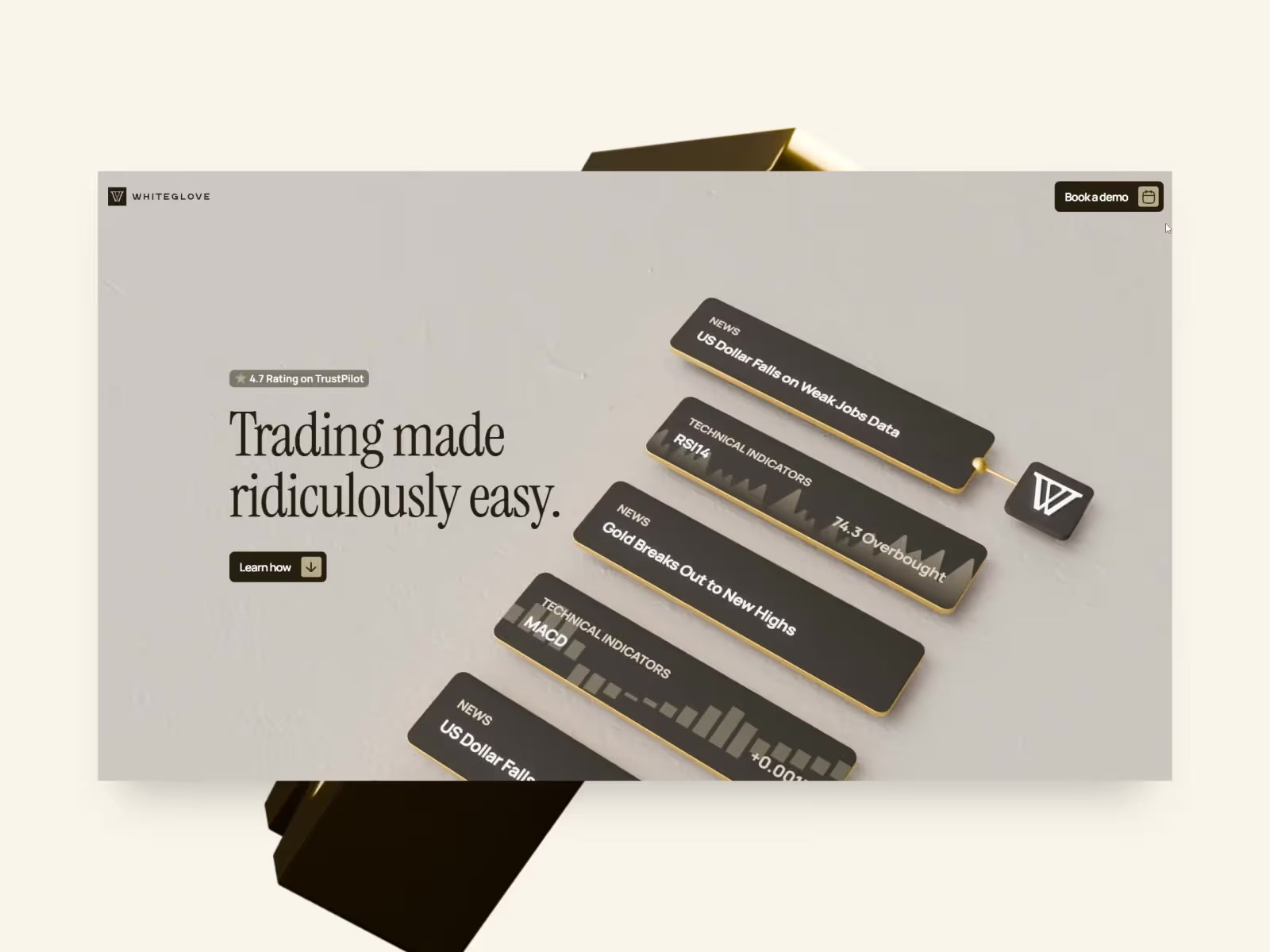
White Glove
Making automated trading easier to understand through a premium brand and website.
Your identity could belong to any competitor
There's a simple exercise I like to imagine when evaluating a brand's digital presence.
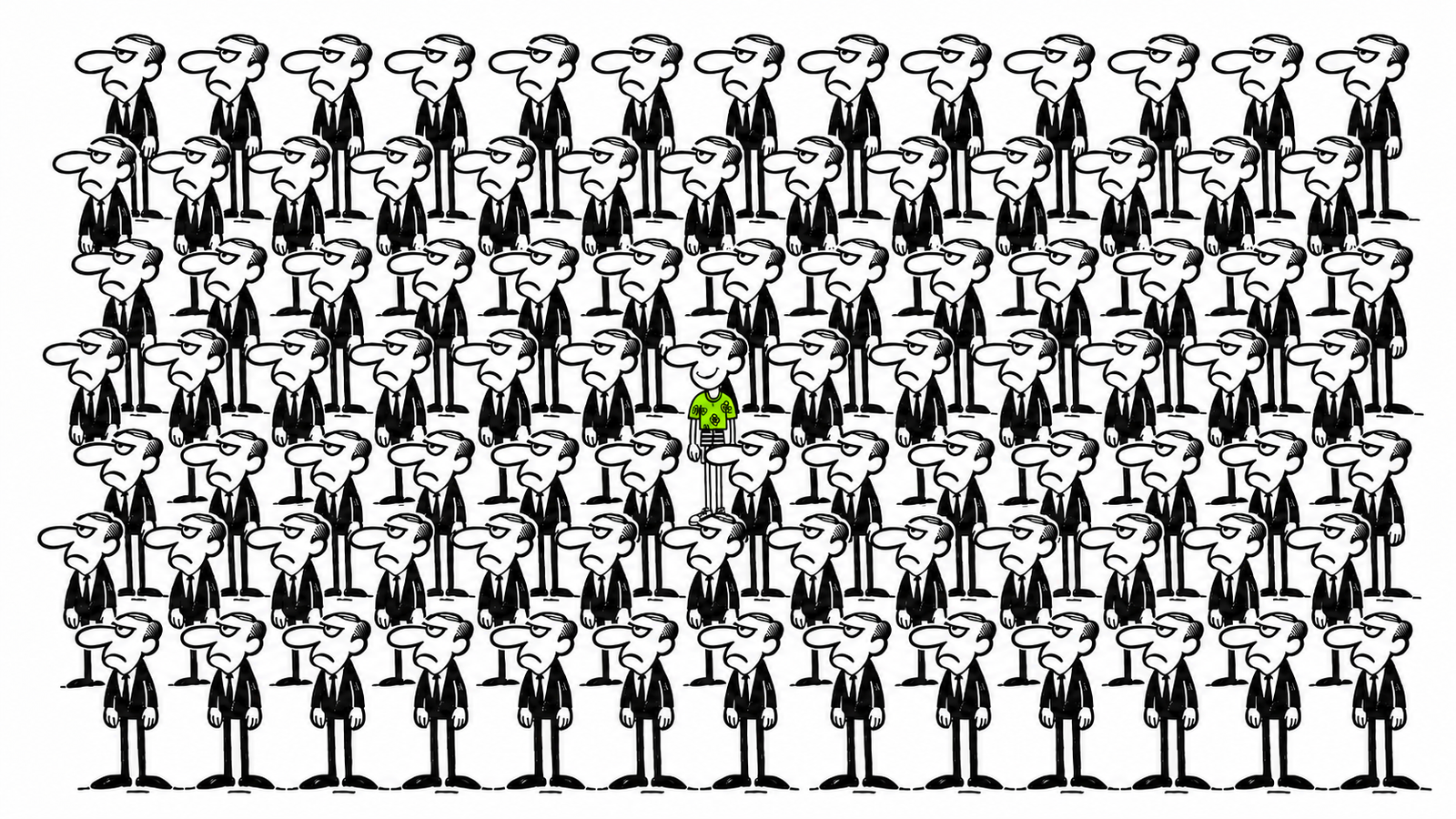
Open the company's homepage and replace its logo with a competitor's.
Would the rest of the website still make sense? Would its colors, typography, imagery, and tone feel just as appropriate for the other company?
If the answer is yes, that may be a sign that the identity isn't expressing anything particularly distinctive.
Of course, companies in the same category often share visual conventions. Familiarity can be useful. But if every part of the experience feels interchangeable, the brand may be doing little to help people recognize what makes the business different.
Agile By Design was a good example.
The company had an established practice and a perspective on agile consulting that challenged conventional, process-heavy approaches. It emphasized the human side of change: autonomy, collaboration, and the way teams actually work.
Yet its previous identity and website blended into the broader consulting market. During our review, we saw a familiar visual pattern across the category: restrained blues, grays, and greens, geometric forms, and a polished but rather impersonal tone.
We chose to explore a different visual direction. Warm colors, strong contrast, organic gestures, and hand-drawn symbols introduced a more expressive and human character. Clean typography and a minimal structure kept the identity grounded and legible.
The website carried that perspective into the narrative. It opened with the team's provocative line, “Agile is Broken. Let us fix it with you,” and used visual elements to reinforce the challenge to conventional thinking.
It was a deliberate departure from the category's visual language, but the decision wasn't simply to do the opposite of everyone else.
It worked as a direction because the company already had a genuinely different point of view. The identity gave that difference a recognizable form.
And that's an important distinction. Going against category conventions can be powerful, but it isn't a formula. Every business needs a direction that grows out of what makes it itself.
Agile By Design
Bringing a consultancy’s unconventional approach to life through branding and Webflow.
A rebrand is a business decision, not a design trend
These two situations are different, but they share the same underlying problem: the brand is no longer representing the business as well as it could.
That doesn't mean every outdated website needs a new logo, or that every company using familiar colors should reinvent its identity.
Sometimes the brand is still right, and the website simply needs to catch up. Sometimes the visual system is strong, but the positioning or message needs more work. And sometimes the company has changed so fundamentally that the entire identity deserves to be reconsidered.
Before starting a redesign, I think it's worth asking a more useful question than whether the brand looks modern:
Does what people see still match what the company is—and what makes it worth choosing?
If the answer is no, the next step is to understand why. The design should follow that diagnosis, not lead it.
Your brand should reflect the company you've become
A strong brand doesn't have to look new all the time. It has to remain true to the business behind it and distinctive enough to be recognized.
Sometimes that means catching up with years of growth. Sometimes it means finally expressing a difference that was there all along.
Your company doesn't need a rebrand just because its identity is getting older.
It may need one when the business has moved forward, but the story people see has been left behind.
Does your brand still represent the business you've built? Let's make your story matter.